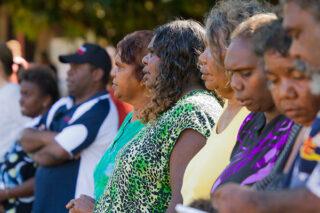
My 2026 basic training course in giving Bible talks or preaching

Dear fellow-workers,

I am planning to run a basic training course for new preachers and Bible teachers via ZOOM from July-November this year.

You are welcome to encourage someone to do this course, if you think they have enough Christian maturity, Bible knowledge, love for people, and ministry experience to benefit from it, and if they are already doing this ministry, or might be able to do this ministry with this training.

The training sessions will be held via ZOOM from 7:30 – 9:00 AEST on the following Tuesday nights: 

July 14, 28,

August 11, 25,

September 1, 22,

October 6, 20,

November 3, 17.

The sessions will include instruction, and opportunities for participants to preach short sermons, and get feedback.

[ I have found a course like this can also help people consider the possibility of future full-time trained vocational gospel ministry!]

The cost is $200 for the course, if someone can afford it!

Here is a form for you to use to recommend a person to do the course. Please get their agreement before you send in the form!

https://forms.gle/2kftGFjZEYnYVjqQ7

Please pray that God will raise up people to do this ministry of the word in local churches and ministries, and will also raise up gospel workers for his global gospel harvest.

With warmest greetings,

Peter

Leading without burnout

Paraklesis

[‘encouragement’, ‘exhortation’, for life and ministry]

Peter Adam | November 2025

Dear friends,

This is my final Paraklesis on this year’s topic of Leadership.

We live in an over-busy world, where everyone is busy, and busyness is a matter of pride and a sign of importance. I heard a little boy asked how he was. His reply, ‘Very busy!’ His reply no doubt reflected his parents’ replies when asked the same question, possibly their style of parenting, and the ideals of our society.

Here are some of the many reasons why people in ministry get into over-busy mode, and can’t break it. As you read through the list, see which reasons apply to you. Busyness is the result of many different causes. We need to tackle the causes, not just the symptom! [For your interest, I have noted the most common causes of my own busyness!]

  • If we love those to whom we minister, we created more opportunities for care.*
  • There are often no limits to the number of people to whom we could minister.*
  • Often we have no direct supervisor who can limit our ministry.*
  • Often we have no limit on the number of people who can request ministry.*
  • We often have to deal with the strong expectations of others for ministry, at the same time as we have our own ideas about priorities and new opportunities for ministry.
  • People usually have to pay for attention and care: we offer it for free.
  • We may find it difficult to say ‘no’ to requests for ministry, because we like to be liked; we like to be needed; because we find it hard to say ‘no’; * and/or because people have strong expectations that we will meet all their needs.
  • We are not good at organising our time, energy, and timetable.*
  • We waste time flitting from one unfinished task to another.*
  • We are not good at setting and achieving our priorities.
  • Those who employ us have unreal expectations of what we can achieve.
  • We are competitive in ministry, and want to do more and better ministry than others.
  • We want to be ‘successful’, or need to be ‘successful’.
  • We are overwhelmed with the seriousness of our ministry, and of its eternal consequences.
  • We are trying to prove something about our capacity and ability.
  • We think that serving people as Christ served us, means meeting all their needs and demands.
  • We over-value our importance in God’s gospel economy, or even imagine that we are the Messiah, when the job is already taken!*
  • We want to function in ministry, where we are professionally competent: and avoid our marriage and family responsibilities, where we feel less competent.
  • We are perfectionists, either by temperament, and/or by our training and practice of our previous employment.
  • We like being needed, and become dependent on those who need us.*
  • We are overwhelmed with personal ambition.
  • Any other cause?

If you want to decrease your busyness, then you need to tackle the causes, not just the symptoms!

Some practical advice that may help.

  1. Don’t make inflexible and permanent decisions about the shape of your ministry, but change them from year to year.
  2. If you come into a ministry in which there are some less helpful patterns of ministry, make changes slowly. Do the good ministry you want to do, but begin where people are, not where you think they should be!
  3. If people expect you to be their slaves, remind them that you will serve them, but that they are not your masters: Christ is your only master!
  4. Put a draft 4 year plan on your wall, so that you can put things in later years, and not think they all have to happen this year!

So, for example, if you were starting in a new ministry:

YearParticular focus of ministry
1Set a culture of Bible, prayer, godliness, mutual care, and outreach. Get to know people and built relationships. Find out what God is already doing. Find people with ministry potential.
2Train people for leadership, mutual care ministry, Bible-teaching ministry, discipling, mentoring, evangelism and administration.
3Encourage and coach people in their ministries, and lead in Bible teaching and evangelism.
4Begin a new ministry or outreach.

5. Don’t fall into the easy trap of thinking that ministry can be reduced to just one task: I must care for people; I must teach people the Bible; I must care for people; I must do evangelism, etc. The New Testament tells us to do all those tasks and more: the issue is how we balance them from time to time.

6. It is well worth while making good use the ‘down-times’ during your ministry year. Use them to work hard on the books of the Bible you will be teaching from and preaching during the coming year. Spend lots of time on each book, asking questions like, ‘What is this book about?’ ‘ ‘Why did God write this book?’ ‘What difference did God intend to make in peoples’ lives by writing this book then?’ ‘What difference does God intend to make in these people’s lives now?’ ‘How does this book apply to individuals?’ ‘How does this book apply to this community?’ The more work you do on a book of the Bible ahead of time, the easier it is to divide it into preachable/teachable sections, and the easier and quicker it is to prepare each sermon/talk.

7. The sooner you start preparing a particular Bible talk/sermon, the more time you have to process it. Begin it at least 6 days before you teach/preach it.

8. Allocate time each week according to your priorities for the current year. For example, for a 40 hour week: 4 hours in ministry prayer by myself and with others; 9 in preparing talks; 3 in team-work; 7 in administration, 5 talking to people before and after services or meetings, praying with them, encouraging them, answering their questions; 2 in one-to one meetings with people; 4 in training, 4 in evangelism, 2 for unforeseen and emergencies! Of course I did not stick absolutely to the hours I had allocated to teach activity, but doing this helped me cover the necessary range of ministry tasks.

9. God’s provision of electricity means that we can work evenings as well as days. But God did not instruct humans to work 6 days and 6 evenings each week! By a ‘day’ he meant a Mediterranean day: sunrise to sunset. It did not include evenings! If you divide the week into 21 sessions [mornings, afternoons, evenings] then I think that working between 11 and 14 sessions a week is satisfactory.

10. Beware of getting too focused on one particular ministry task! If you are not careful, time spent on one act of ministry can balloon out of control! The advantage of allocating specific hours a week to different ministries can help you avoid doing this.

11. In order to continue long-term in ministry you need to keep as healthy as you can. We are not disembodied ministry machines! Healthy food, healthy diet, healthy exercise, healthy sleep, healthy relationships with family and friends, and healthy activities and interests apart from ministry are essential. Don’t think that you are exceptional, and can ignore these. If you do, you will diminish your quality and quantity of ministry.

12. Build some mutual accountability with a colleague or colleagues in ministry, meet and pray with that person or persons, and support each other. Don’t dump your all ministry frustrations on your spouse!

13. Remember that God is in charge of his people, that Jesus is building his church, that God can use you in ministry, but also achieve his gospel purposes without you!

14. Regularly confess your sins of ministry, both bad things you have done, and good things you have not done, and receive forgiveness and cleansing through the blood of Christ. Don’t build up a burden of guilt.

15. Like the apostles, devote yourself to prayer and the ministry of the word [Acts 6:3].

16. Thank God each day for the Bible, ask God to continue to transform you into the image of Christ as he teaches, trains, rebukes and encourages you through the Bible; and use it as your chief tool of ministry in every part of your ministry.

17. Spend time each day praising and thanking God that he has prepared good works for you to do; that he works in you and through you to achieve those good works; and that he will provide all the energy, time, and wisdom for you do to those good works. At the end of the day, commit those good works and the people you have served to God, and entrust them to his powerful care and love.

18. Spend time each day praising God and thanking him that he will achieve his gospel plan for this world, that he will bring the nations to trust in Christ and honour Christ, and that he will bring people from all nations to gather round his throne to worship him and worship the Lamb. Don’t just know this, but praise and thank God for his divine gospel plan, and divine gospel power.

Four good books on this topic:

  • Peter Brain, Going the Distance: How to Stay Fit for a Lifetime of Ministry, Matthias Media, 2004.
  • Zack Eswine, Sensing Jesus: Life and Ministry as a Human Being, Crossway, 2012.
  • Kirsten Birkett, Resilience: A Spiritual Project, Latimer Trust, 2015.
  • Christopher Ash, Zeal without Burnout, The Good Book Company, 2016.

This is my final Paraklesis for this year.

With warmest good wishes,

Yours,

Leaders choose their model of leadership wisely

Paraklesis [‘encouragement’, ‘exhortation’, for life and ministry]
Peter Adam | October 2025

Biblical principles

The Bible is our text-book for leadership, as it is our text-book for preaching, evangelism, training, pastoral care, and every other aspect of life and ministry!

It is common to take Old Testament models of leadership, and we can learn from them. But their contexts and tasks were very different to ours [not many of us are leading nations – Moses], or leading God’s people to conquer the Holy Land – Joshua], or building walls around a city – Nehemiah!], and we need to view them with New Testament eyes.

What are some key New Testament principles of leadership?

  1. Leaders recognise that Jesus the Christ is the builder, saviour, Lord, judge, head, ruler of this church and of all gospel ministries, and chief shepherd of his flock. ‘I will build my church’ [Matt 16:18]; ‘Christ loved the church and gave himself up for her … to present her to himself as a radiant church… holy and blameless’ [Ephes 5:25,27]; ‘from Christ the whole body, joined and held together every supporting ligament, grows and builds itself up in love’ [Ephes 4:16]; ‘we must all appear before the judgement seat of Christ’ [2 Cor 5:10]; ‘the seven lampstands are the seven churches’ [Rev 1:12, 20]; ‘the Chief Shepherd appears’ [1 Pet 5:4].

2. Leaders are stewards of their Lord, and will one day give account to him. ‘The master of that servant will come on a day when he does not expect him and at an hour he is not aware of’ [Matt 24:50]; ‘Well done, good and faithful servant! You have been faithful with a few things; I will put you in charge of many things. Come and share your master’s happiness!’ [Matt 25:23]; ‘In the presence of God and of Christ Jesus, who will judge the living and the dead, and in view of his appearing and his kingdom, I give you this charge’ [2 Tim 4:1]; ‘But each one should build with care. If what has been built survives, the builder will receive a reward. If it is burned up, the builder will suffer loss but yet will be saved—even though only as one escaping through the flames’ [1 Cor 3:10,14,15].

3. Leaders serve others, and do not lord it over them. ‘You know that those who are regarded as rulers of the Gentiles lord it over them, and their high officials exercise authority over them. Not so with you. Instead, whoever wants to become great among you must be your servant, and whoever wants to be first must be slave of all. For even the Son of Man did not come to be served, but to serve, and to give his life as a ransom for many’ [Mark 10:42-45]; ‘Now that I, your Lord and Teacher, have washed your feet, you also should wash one another’s feet. I have set you an example that you should do as I have done for you’ [John 13:14,15].

4. Leaders love their fellow-workers and love those to whom they minister.  ‘Therefore, as God’s chosen people, holy and dearly loved, clothe yourselves with compassion, kindness, humility, gentleness and patience. Bear with each other and forgive one another if any of you has a grievance against someone. Forgive as the Lord forgave you. And over all these virtues put on love, which binds them all together in perfect unity’ [Col 3:12-14]; ‘If I speak in the tongues of men or of angels, but do not have love, I am only a resounding gong or a clanging cymbal. If I have the gift of prophecy and can fathom all mysteries and all knowledge, and if I have a faith that can move mountains, but do not have love, I am nothing. If I give all I possess to the poor and give over my body to hardship that I may boast, but do not have love, I gain nothing. Love is patient, love is kind. It does not envy, it does not boast, it is not proud. It does not dishonour others, it is not self-seeking, it is not easily angered, it keeps no record of wrongs. Love does not delight in evil but rejoices with the truth. It always protects, always trusts, always hopes, always perseveres’ [1 Cor 13:1-7].

5. Leaders are culturally aware, and shape their ministry with that awareness. ‘Paul wanted to take him [Timothy] along on the journey, so he circumcised him because of the Jews who lived in that area, for they all knew that his father was a Greek’ [Acts 16:3]; ‘Though I am free and belong to no one, I have made myself a slave to everyone, to win as many as possible. To the Jews I became like a Jew, to win the Jews. To those under the law I became like one under the law (though I myself am not under the law), so as to win those under the law. To those not having the law I became like one not having the law … so as to win those not having the law. To the weak I became weak, to win the weak. I have become all things to all people so that by all possible means I might save some. I do all this for the sake of the gospel, that I may share in its blessings [1 Cor 9:19-23].

6. Leaders enable the ministry of others. ‘Meanwhile a Jew named Apollos, a native of Alexandria, came to Ephesus. He was a learned man, with a thorough knowledge of the Scriptures. He had been instructed in the way of the Lord, and he spoke with great fervour and taught about Jesus accurately, though he knew only the baptism of John. He began to speak boldly in the synagogue. When Priscilla and Aquila heard him, they invited him to their home and explained to him the way of God more adequately’ [Acts 19:24-26]; ‘Christ himself gave the apostles, the prophets, the evangelists, the pastors and teachers, to equip his people for works of service, so that the body of Christ may be built up …’ [Ephes 4:11,12]; ’You then, my son, be strong in the grace that is in Christ Jesus. And the things you have heard me say in the presence of many witnesses entrust to reliable people who will also be qualified to teach others’ [2 Tim 1:1,2].

7. Leaders lead in teams. ’Do your best to come to me quickly, for Demas, because he loved this world, has deserted me and has gone to Thessalonica. Crescens has gone to Galatia, and Titus to Dalmatia. Only Luke is with me. Get Mark and bring him with you, because he is helpful to me in my ministry. I sent Tychicus to Ephesus … Greet Priscilla and Aquila and the household of Onesiphorus. Erastus stayed in Corinth, and I left Trophimus sick in Miletus. Do your best to get here before winter. Eubulus greets you, and so do Pudens, Linus, Claudia and all the brothers and sisters’ [2 Tim 4:9-12,19-21]; ‘I planted the seed, Apollos watered it, but God has been making it grow. So neither the one who plants nor the one who waters is anything, but only God, who makes things grow … For we are co-workers in God’s service; you are God’s field, God’s building’ [1 Cor 3:6,7,9].

8. Leaders devote themselves to prayer. ‘One of those days Jesus went out to a mountainside to pray, and spent the night praying to God. When morning came, he called his disciples to him and chose twelve of them, whom he also designated apostles’ [Luke 6:12,13]; ‘We [the apostles] will devote ourselves to prayer and the ministry of the word’ [Acts 6:3]. Paul wrote: ‘I have not stopped giving thanks for you, remembering you in my prayers’ … ‘I thank my God every time I remember you’ [Phil 1:3]; ‘We always thank God … when we pray for you’ [Col 1:3]; ‘… constantly I remember you in my prayers at all times’ [Rom 1:9,10].

9. Leaders use the Bible in all situations, [planning, preaching, training, mentoring, evangelising, discipling, leading teams, counselling, etc] as their God-given instrument of ministry.  ‘He [Jesus] said to them, “This is what I told you while I was still with you: Everything must be fulfilled that is written about me in the Law of Moses, the Prophets and the Psalms”’ Luke 24:44]; 14 ‘He [the Spirit of Truth] will glorify me [Jesus] and because it is from me that he will receive what he will make known to you. All that belongs to the Father is mine. That is why I said the Spirit will receive from me what he will make known to you’ [John 16:15]; ‘Sanctify them by the truth; your word is truth’ [John 17:17]; ‘He [Paul] witnessed to them from morning till evening, explaining about the kingdom of God, and from the Law of Moses and from the Prophets he tried to persuade them about Jesus’ [Acts 28:23]; ‘What we [apostles] have received is not the spirit of the world, but the Spirit who is from God, so that we may understand what God has freely given us. This is what we speak, not in words taught us by human wisdom but in words taught by the Spirit, explaining spiritual realities with Spirit-taught words’ [1 Cor 3:12,13]; ‘Consequently, you are no longer foreigners and strangers, but fellow citizens with God’s people and also members of his household, built on the foundation of the apostles and prophets, with Christ Jesus himself as the chief cornerstone’ [Ephes 2:19,20];  ‘And we also thank God continually because, when you received the word of God, which you heard from us, you accepted it not as a human word, but as it actually is, the word of God, which is indeed at work in you who believe’ [1Thess 2: 13].

10. Leaders lead thorough the ministry of the word. ‘The farmer sows the word…’ [Mark 4:14]; ‘All authority in heaven and on earth has been given to me. Therefore go and make disciples of all nations, baptizing them in the name of the Father and of the Son and of the Holy Spirit, and teaching them to obey everything I have commanded you. And surely I am with you always, to the very end of the age’ [Matt 28:18-20]; ‘This is what is written: The Messiah will suffer and rise from the dead on the third day, and repentance for the forgiveness of sins will be preached in his name to all nations, beginning at Jerusalem’ Luke 24:46.47]; ‘He [God] gave me the priestly duty of proclaiming the gospel of God, so that the Gentiles might become an offering acceptable to God, sanctified by the Holy Spirit … I have fully proclaimed the gospel of Christ [Rom 15:16,19]; ‘Preach the word; be prepared in season and out of season; correct, rebuke and encourage—with great patience and careful instruction’ [2 Tim 4:2].

11. Leaders lead theologically, commending and promoting the truth, and correcting theological and moral error. ‘Do your best to present yourself to God as one approved, a worker who does not need to be ashamed and who correctly handles the word of truth’ [2 Tim 2:15]; ‘The Lord’s servant must not be quarrelsome but must be kind to everyone, able to teach, not resentful. Opponents must be gently instructed, in the hope that God will grant them repentance leading them to a knowledge of the truth [2 Tim 3:24-25]; ‘He must hold firmly to the trustworthy message as it has been taught, so that he can encourage others by sound doctrine and refute those who oppose it’ [Tit 1:9].

12. Leaders have a strategy, a plan, not only about the kind of ministry they want to do, but also about where and how to do it. ‘Let us go somewhere else – to the nearby villages -so that I can preach there also. That is why I have come’ [Mark 1:38]; ‘you will be my witnesses in Jerusalem and in all Judea and Samaria, and to the ends of the earth’ [Acts 1:8]; ‘It has always been my ambition to preach the gospel where Christ was not known …’ [Rom 15:20]; ‘I have become all things to all people so that by all possible means I might save some’ [1 Cor 9:22]; ‘we agree that we should go to the Gentiles, and they to the circumcised [Gal 2:9]; ‘appoint elders in every town’ [Tit 1:5].

What are some negative models of leadership which we might easily adopt from our world, or that others might pressure us to adopt from our world?

  • A ‘Business model’, with a strong governance Board instructing the CEO about every aspect of the ministry, with a strong emphasis on key performance indicators, measurable outcomes, and competition. [Not all Boards know about the nature of gospel ministry, understand the severe limitations and relevance of what can be measured in this life, how all ministry is an act of faith, and why others are fellow-workers, not competitors in God’s economy. They also tend to think that members of churches can be treated as paid employees, who have to do what the CEO tells them to do!]
  • ‘Anti-institutional model’, with no governance or management structures or policies in place. [Informality is attractive, but does not allow for significant growth in ministry, which changes the nature of relationships. It does not see the sinful tendencies which can flourish without clear and public responsibilities in decision-making, accountabilities, finances, and employment. Who can appoint ministers, elders, leaders? For how long are they appointed? Who can review them and terminate their appointment if needed? How will major decisions about the life of the church or ministry be made? ‘What is the doctrine of the church?]
  • ‘Weak model’, in which important issues are avoided, there is no significant forward planning, and leaders fail to take responsibility for their own actions, or for the progress of the ministry. [This is the easiest style of leadership because it does not lead! It avoids difficult decisions, and lets the church or ministry drift along. Its only evaluation becomes: ‘Are people happy?’, not a safe guide to effective ministry and outreach!]
  • ‘Magic solution model’, in which a model of church or ministry life which is publicly acclaimed as successful, is imported and applied with no regard to present patterns of life or ministry, context of ministry, or cultural appropriateness; and is trusted and promised as a certain path to extraordinary growth and success. [This attracts leaders who are hungry for growth, and who think that the right ministry model will achieve it, and who look for a popular international or national model to follow. But the model may be wrong, and may not fit the context or the people. Most importantly, God gives the growth, not the model!]
  • ‘Simplistic model’, in which one Christian ministry or duty is elevated as superior to all others, and made the assessment of success or failure. [‘Teach the Bible’, ‘tend the flock’, ‘do evangelism’, ‘care for the needy’ are all legitimate and right: the Bible tells us to do them all. But if we put all our energy into one, and neglect the others, we end up disobeying God!] [Notice the important distinction between Churches, which should do many different ministries, and Focussed Ministries, and Chaplaincies outlined below.]
  • ‘Liberal model’, in which anything which is not in accord with contemporary ideas is neglected or dropped, in the hope of making Christianity more acceptable, and so gaining more converts. [This follows the liberalising pattern of the 19th Century Liberal Theology movement, which first of all dropped Creation, then Old Testament miracle, then Jesus’ miracles, then the resurrection, then the incarnation, and of course the inspiration of Scripture. Contemporary evangelicalism follows a similar pattern. In the words of Brian Rosner, ‘The test of Biblical Theology is not what you include, it is what you leave out’!]
  • ‘Success model’, in which everything serves the success of the ministry, while ignoring the will, power, plan, and glory of God. [Success, what sacrifices are committed in your name! How many of God’s people are mangled in your name. What false pride or false failure results from choosing you as our idol!]
  • ‘Thug model’, in which the leader, or leader and close allies, think that they are omniscient, infallible, and entirely trustworthy and accountable to no one. [This attracts the machos, and also attracts people who need macho leaders. Unfortunately, though it can work in the short-term, it explodes in the long-term: and, more significantly, it obscures Christ, rather than revealing him.]
  • ‘God came when I came model’, in which the new leader fails to ponder what God is already doing in the congregation or ministry, and immediately creates a new identity and goals, without regard to the previous work of God in that church or ministry. [How arrogant to think that God only arrived when you did, or that you are more in touch with God than the present congregation, or the previous ministry. ‘Three lessons to learn: Humility, humility humility!’]

I am sorry to add yet more material, but we need the following distinctions to make wise decisions.

  1. Churches. These are the models of ministry that are the focus of NT instructions. They are the model of ministry mandated by the NT. They have team leadership; they welcome and serve everyone from their local community. They have all the responsibilities of evangelism, discipling, training people for ministry, encouraging mutual ministry, teaching people the Scriptures, praying, and baptism and the Lord’s Supper, caring for families, single people, children, elderly people, those who suffer from long-term illness, caring for the needy, welcoming people who do not have obvious ministry potential, and doing good in the community.
  2. Focused ministries. This is a model which we have developed. Each of these has a particular focus of ministry, and/or a particular focus group to serve. They include missionary societies, Bible and Theological Colleges, the Bible Society, university student ministry, schools’ ministry, Christian publishing, etc. These rightly have a limited ministry focus, and can rightly not serve in other areas, or with other people. They are selective. They rightly follow what I have described as a ‘Simplistic model’, above. Because they are so focussed so specifically, they need not and do not serve people who do not fit their ministry. Because they are focussed, they can achieve more obvious specialist expertise than a local church, which has to do lots of things, and accept and serve everyone who comes, even if they do not appear to have much to contribute to the church! This is why local church ministry looks so weak compared to a focussed ministry. And this is why local church life and ministry is so rich!
  3. Chaplaincies. This is where ministry is focused on already existing community, and includes chaplains to the armed forces, hospitals, schools, sports, prisons, etc. Here the context of ministry requires specialist skills. And the chaplains also have to work within the constraints of the community in which they work, and serve the values of that community, as well as the gospel of Christ. It takes special gifts to negotiate these dual responsibilities, and of course the structural context of ministry is provided by the body serving the community.

I have included this to help you understand the varied contexts of ministries in which we work, each with its own possibilities, expectations, challenges, and demands. Leadership looks different in each of these contexts, and ministry looks different, as well.

Just to remind you, this Paraklesis continues the theme of this year.

Feb. Leadership or Leader-slip.

Mar. Leaders lead in prayer

April. Leaders lead by preaching the Scriptures.

May. Leaders lead by standing.

June. Leaders lead as created and saved, sinners and saints.

July. Leaders know that God is the real leader.

August. Leaders lead by the quality of their lives.

Sep. Leaders lead in governance, management, and administration.

Oct. Leaders choose their model of leadership wisely.

The final in the series will be November: Leaders learn to balance their varied responsibilities and not burn out or opt out!

To close

Here is an excellent quotation from my dear friend Allan Chapple, who has been a constantly inspiring and encouraging friend since 1965! This is from his new edition of Ministry under the microscope. The Who, What, Why, and How of Christian Ministry, Latimer Trust, 2025.

‘Ministry is foundational: serving is the root and leadership is no more than one of its fruit.’ P. 10.

And another quotation from a friend who remains anonymous: ‘CEO = Chief Encouragement Officer.’

With warmest greetings in Christ,

Yours,

What we pray at the end of our sermons or Bible talks

Enabling and training people to respond to God, after he has spoken to them, in the Bible reading and sermon.

Peter Adam

September 2025

God speaks to when we read or hear the Bible. When someone speaks to us, the polite response is to speak to them, responding to what they have said!

As children learn to speak by the words their parents speak to them, so we learn to speak to God through his words to us.

Our first response to God when we read the Bible should be to ask ourselves ‘What should I pray or say?’ before we think, ‘What should I do?’.

What we say to God will be more varied than ‘I will do what you tell me to do!’ It might be adoration and praise for who God is; it might be thanks for what he has done or will do; it might be a request for greater understanding, or for strength to do what he has said; it might be a confession of sin; it might be a prayer for other, for our church, or for our world; it might be lament and grief for the state of our church or our world, then leading to intercession.

If God says to do something, then of course we will need to pray for his help and direction in doing it!

Limiting our question to ‘What should I do?’ limits our reading of the Bible, as we only look for commands to action.

Limiting our question to ‘What should I do?’ severely restricts our expression of our relationship to God. It sadly balances the way in which we restrict our prayers to requests for God to act. God tells us to do his list, and we tell him our list! It is then a task-based relationship.

Limiting our question to ‘What should I do, what should we do?’ severely limits our view of God, and misses so much of God’s self-revelation in the Bible! He is much more than an instruction-giving God! He is a mighty creator, a gracious and loving and providing Heavenly Father, a God who rules us for our good and his glory, the God who forgives our sins, cleanses us from our sin, defeated sin, death and Satan by his Son’s death on the cross, who pours his love into our hearts by his Holy Spirit, who reveals himself in the Bible, who works all things for good for those who love him, who turns human evil for his good purposes, who gives us all things richly to enjoy, who calls us to praise and thank him, cast our burdens on him, confess our sins to him, assuring us of our forgiveness, and who gives eternal life to all who trust in his Son!

As so often, a weakness in prayer reveals a broader weakness in our view of God, and our Christian lives. There is much more to God than someone who tells us what to do, and much more to being a Christian than doing what he tells us to do.

We damage ourselves with a true but severely limited view of God. And we damage others through our ministries by modelling and teaching this limited view of God.

Our use of the word ‘application’ in the preparation and preaching of sermons seems to practical application, that is, what we should do. [Our bias towards the ‘practical’ also directs us away from prayer: this is bizarre, of course, because we are in permanent dependence on God for everything in life and ministry.

We must pay particular attention to the prayers we pray at the end of our sermons. A general ‘thank you to God for the Bible’ is inadequate, unless it flows out of the specific content of the Bible passage and sermon. Prepare your prayer carefully and make it appropriate to the Bible passage and sermon, and, if possible, include key words and phrases from the Bible passage which you have featured in your sermon.

Put these prayers on the screen, and/or in the news-sheet. Then people can pray to God with you immediately after the sermon, and, if the words are in the newssheet, pray the words again during the week.

This is a good practice not only for responding to the Bible reading and sermon, but also models for people how to respond in prayer after their own Bible reading, their family Bible reading, and their Home Bible Study group.

Some examples:

After a sermon on John 9. [There were a number of people who were not believers in the congregation]. I provided 3 prayers.

1. [We pray for unbelievers].

Gracious God and loving Heavenly Father, we pray for people who cannot see your glory in your Son, our Lord Jesus Christ. Please open their eyes to see Jesus as:

  • The saviour of the world,
  • The bread of life,
  • The good shepherd, who laid down his life for us,
  • The resurrection and the life,
  • The light of this world.

In Jesus’ name, Amen.

2. [We pray for ourselves]

We praise you, Lord Jesus, God’s Son, and God’s Word, for you are the saviour of the world, the bread of life, the good shepherd, who laid down his life for us, the resurrection and the life, and the light of this world.

Heavenly Father, we pray for ourselves, that you would open our eyes more and more to your glory, grace and truth in Jesus your Son and our Saviour, and that we would live our lives more and more knowing and serving Jesus as the light of this world. In his name we pray. Amen.

3.  [A prayer for unbelievers to pray. I said ‘If you do not yet know Christ as the light of the world’ but would like to ask Jesus to reveal himself to you, then pray this prayer in your heart as I pray it aloud’].

Jesus,  if you exist, I don’t see you very clearly, so I am not yet able to trust you. Please shine your light into my life, as I read the Bible and pray. Please help me to learn about you, and get to know you more and more. Amen. 

After a sermon from 2 Corinthians 8 and 9.

[in the sermon I began with God’s constant creation generosity, then moved to Christ’s sacrificial generosity out of his poverty, displayed by the Macedonians giving out of their poverty].

Gracious God, we praise and thank you for your generosity to us in your creation and constant care for this world and human life. We thank you for the gift of life, for air to breathe, water to drink and food to eat. We thank you for the richness of human life, for marriage, children, parents, friends, and all the people who bring joy to our lives. We thank you for work to do, your creation to enjoy, for your gifts of homes, safety, beauty, learning, art, music, food, and all the joys of human life. We thank you that your pour out your gifts generously because you love all you have made. Help us to be generous children of our generous Father.

Gracious God and loving Heavenly Father, we praise and thank you for your generosity in sending your Son to be the Saviour of the world. We praise for the sacrificial generosity of your Son, who though he was rich, yet for our sake became poor, that through his poverty we might become rich. We thank you for his sacrifice, his suffering, his serving, his atoning death for our sins, and his mighty resurrection. Help us to be sacrificially generous in our hearts, our relationships, our membership of our church, in loving our neighbour, and in every part of our lives, for your glory. We ask these prayers in the name of Jesus Christ, our Saviour and Lord. Amen.

After a sermon on Romans 6.

Here you will notice that the mood of the prayer is different. It is not a ‘please help me/us to…’ but, ‘we will…’ based of course on the praise of Jesus which precedes it. When introducing the prayer on the screen, I gave people time to read it, and then said that if anyone was not able to make these promises at this time, they should not say the words.

Jesus Christ, our saviour and Lord, we praise you and thank you, for you were delivered over to death for our sins, and raised to life for our justification.

We also praise and thank you that we all died with you in your death, and we were all raised with you in your resurrection.

We reckon ourselves dead to sin and alive to God in you.

  • We will not let sin reign in our bodies, or obey its desires.
  • We will not offer any part of our bodies to sin to serve unrighteousness.
  • We are alive from the dead in you: we offer ourselves, and every part of ourselves, to God, to serve him in righteousness.

In your name, and for your glory. Amen.

Hebrews’ Prayer

I recently had the privilege of preaching the final sermon in a series on Hebrews at St Jude’s, Carlton, my home church. The prayer I prepared enabled the congregation to respond to the whole book, and the whole series of sermons.

[I designed the prayer so that the whole congregation would pray some sections and each side of the congregation would have sections to say out loud, while the other side joined in silently.

This follows the Old Testament practice of having two choirs, to lead God’s people in prayer and praise. See 2 Chronicles 7, and Nehemiah 11. It is good to pray and praise, and also good to hear others praying and praising, and to echo their words in our hearts.]

‘Let’s pray this prayer for St Jude’s, and for other churches around the world.’

[All] O gracious God, you have spoken to us by your Son, the Lord Jesus, through whom you made the universe, and who is the radiance of your glory. He who provided purification for our sins, and is now seated at your right hand in glory and majesty. He is the builder and Lord of your household, your people, your church.

1. We praise you that he shared our humanity, so we are his brothers and sisters. By his death he broke the devil’s power of death, by making atonement for our sins. He suffered when he was tempted, so he is able to help us in our temptations.

2. We thank you, for you appointed him as our high priest, who empathizes with our weaknesses. Through him we can approach your throne of grace with confidence, to find mercy and grace to help us in our time of need.

1. We pray that you would enable us to hear your voice in the Bible, that none of us would harden our hearts. Take from us a sinful, unbelieving heart that turns away from you, the living God.

2. We thank you for your living and active word, the Bible, which pierces our hearts, shows us our sins, and shows us our Saviour.

1. We rejoice, because Jesus lives forever, so he is able to save us completely when we come to you through him. He always lives to intercede for us.

2. We praise you, because he offered himself unblemished to you through the eternal Spirit. So he can cleanse our consciences from acts that lead to death, that we may serve you, the living God!

1. We thank you that Christ was sacrificed once to take away the sins of many. And we thank you that he will appear a second time, not to bear sin, but to bring salvation to those who are waiting for him.

2. We praise and thank you that we have been made holy through the sacrifice of the body of Jesus Christ once for all. For by that one sacrifice he has made perfect forever those who are being made holy.

[All] We praise you that we have confidence to enter into your presence in your Most Holy Place by the blood of Jesus. We praise you that we have a great priest over your household, the church of God. We draw near to you with sincere hearts and with the full assurance that faith brings, with our hearts sprinkled to cleanse us from our guilty consciences and our bodies washed with pure water. We hold unswervingly to the hope we profess, for you are faithful to your promises. And we will spur one another on toward love and good deeds, not giving up meeting together, but encouraging one another—and all the more as we see the Day approaching.

1. Please help us and all your people to throw off everything that hinders and the sin that so easily entangles us, so we may run with perseverance the race marked out for us. We will fix our eyes on Jesus, the pioneer and perfecter of faith. For the joy set before him he endured the cross, scorning its shame, and sat down at the right hand of your throne on high.

2. Please help us and all your people to endure hardship, and accept your loving discipline, that we may grow in holiness and pursue it. Help us not fall short of your grace, and let no bitter root grow up to destroy and defile us. Help us not to refuse you as you speak to us through the Scriptures, to be thankful, and so worship you acceptably with reverence and awe, for you, God, are a consuming fire.

[All] As we worship you with reverence and awe, graciously assist us to worship you in our daily lives:

1. Help us to: love one another as brothers and sisters; show hospitality to strangers; remember fellow-believers who are suffering or in prison for their faith in Christ; Honour marriage; keep our lives free from the love of money, and learn contentment; remember our leaders, who speak your Word to us, respect them and receive and welcome their teaching, and imitate their lives.

2. We praise you that Jesus is the same yesterday, today, and for ever. Help us to not be carried away by strange ideas and teaching. Help us to suffer with Jesus, and not be ashamed of bearing disgrace for him. For here we do not have an enduring city, but we are looking for the city that is to come. Through Jesus, continually offer to you a sacrifice of praise—the fruit of lips that openly profess your name. Prompt us to good and share with others, for with such sacrifices you are well pleased.

All. God of peace, who through the blood of the eternal covenant brought back from the dead our Lord Jesus, that great Shepherd of the sheep, equip us with everything good for doing your will. Please work in us what is pleasing to you, through Jesus Christ, to whom be glory for ever and ever. Amen.

Further comments.

I notice that a common response among believers whom I hear praying, is to ask for God’s help to do what he wants. This is not a wrong prayer to pray! But the balance between God’s grace and personal agency is a subtle one! Paul tells the Philippians to ‘work out our own salvation’ while also recognising that ‘God who works in you to will and to act in order to fulfill his good purpose’ [Phil 2:12,13]. But he can also say, ‘I press on to take hold of that for which Christ Jesus took hold of me’, and ‘I press on toward the goal to win the prize for which God has called me heavenward in Christ Jesus’ [Phil 3:12,14]. Sometimes God’s agency overwhelms our personal agency as in new birth, and in giving us faith in Jesus Christ. But, once we are believers, God also enables our personal agency. It is right to ask God to act. It is also right to see God enabling our personal agency. When Paul writes, ‘Flee from sexual immorality’, ‘flee from idolatry’ [1 Cor 6:18, 10:14], he does not want the Corinthians to sit around and wait until they feel enabled by God to run for their lives! He wants them to act immediately and constantly! Run now!

I think that a current cause of weakness in our Christianity is that we overdose on dependence and so avoid action! When God says, ‘offer yourselves to God’ [Rom 6:13], that is exactly what we should do. And if we say that we will do it, we are more likely to do it! [Notice that the promised made by groom and bride in the marriage service are unqualified promises! Though of course they are followed by prayer that God will enable them to do what they have promised.]

A good solution is to say to God that will we do what he wants, and also ask him to help us to do so. This includes both exercising responsible [and enabled] personal agency, and also asking for God’s help.

You may also notice that in these prayers I have generally used ‘we’ and ‘us’, rather than ‘I’ and ‘me’. I don’t think the latter is wrong in response to a sermon, but as a matter of fact, in most of the Bible God addresses his people in their corporate life, their shared values, the common actions they do, their shared default values and actions. When God addresses his people, then it is right for his community to respond! [See Exodus 24:7, every Psalm in which ‘we’ speak, and Jesus challenges to the seven churches in Revelation 2 and 3]. Shared sins are the most invisible sins, and individuals will be shaped by their communities. And every church member has a responsibility to God not only for their own lives, but also for the shared life of the community, expressed in prayer and in mutual exhortation, encouragement and challenge.

We could of course express both the corporate and the individual. Here is a prayer which does both based on Romans 5:1-5.

Gracious God we all praise and thank you that we have been justified by faith, that we have peace with you through our Lord Jesus Christ, that we stand in your grace, and boast in the hope of your glory.

Each one of us prays that you would help us to glory in our sufferings, and so grow more and more in perseverance, character, and hope in our lives. And please pour your love into our hearts as individuals and as a church through your Holy Spirit. In Jesus’ name. Amen.

Or we could include ‘we’ and ‘us’, as well as ‘I’ and ‘me’. A prayer in response to Romans 12:1-2, to follow a sermon which challenged both the church community as a whole, and also each person present. to do what Paul tells us to do!

Gracious God, because of your great mercy to us, I offer my body to you now, as a living sacrifice, holy and pleasing to you, through the atoning death of your Son, the Lord Jesus. I will not conform to the pattern of this world: please transform me through the renewing of my mind, that I may do your good, pleasing and perfect will. I ask this through Jesus Christ our Saviour and Lord. Amen.

Gracious God, because of your great mercy to us we offer our bodies to you now, as living sacrifices, holy and pleasing to you, through the atoning death of your Son, the Lord Jesus. We will not conform to the pattern of this world: please transform us through the renewing of our minds, that we may do your good, pleasing and perfect will. We ask this through Jesus Christ our Saviour and Lord. Amen.

I think it would be effective if people prayed the individual prayer, and then the corporate prayer, as the latter is the more appropriate response to the Bible passage, and so a better climax to the prayer after the sermon.

Preachers! I find that writing a prayer for the congregation to pray after a Bible reading and sermon, helps me focus on what response I am praying for them, and how to express that in the sermon!

Leaders lead in governance, management, and administration

Paraklesis

[‘encouragement’, ‘exhortation’, for life and ministry]

September 2025

Peter Adam

Dear friends,

We need godly and effective governance, management and administration in all our churches and ministries, for gospel growth and God’s glory!

‘Governance’ means setting goals, values, godliness and structures of a church or ministry, including the employment [and dis-employment] of paid staff, the management of money, and a transparent structure of responsibilities and accountabilities.

‘Management’ means creating and maintaining the implementation of these goals, values, structures, systems and accountabilities.

‘Administration’ means making the systems and methods which serve these goals, values, structures and accountabilities, work effectively

If you are a lone church planter, you will be doing all of these, as well as the ‘hands-on ministry’! If you are doing ministry in a large church or ministry, then more people will be involved in doing these ministries.

For some people ‘Governance, management, and administration’ is a constant frustration. ‘I want to get on with “hands-on ministry!”’

As it happens, I enjoyed doing this ministry as much as ‘hands-on ministry’, because it enabled the ministry of others. It provides the trellis on which the vine of ministry can grow, to use Col Marshall’s famous image. I found as much joy in the ‘hands-on ministry’ of others as I did in my own.

However I also worked to ensure that many others were able to contribute to these important ministries!

Do ministers of the word need to have awareness and some competence in these areas which we now call governance, management and administration? Yes!

Do ministers of the word need to work with others in these areas, and share their leadership with others? Yes!

As Paul says, ‘an overseer manages God’s household [oikonomia]’ [Titus 1:7], and, ‘if he does not know how to manage his own house [oikos], how can he take care of God’s church?’ [1 Tim3:5].

A 1st Century AD Roman ‘household’ or ‘house’ included the immediate family, other relatives, the slaves, and the family business. This was much more than dad, mum, two children, and a cat! The ‘oikos’ or ‘oikonomia’ was a business as well as a family, and included the family business as well as family life. In short, relationships and business!

Here are 12 big mistakes ministers of the word might make:

  1. Devote all their time to governance, management and administration, and neglect their own Christian growth and prayer, and not convert, disciple, and train others in ministry.
  2. Devote themselves to governance, management and administration, and adopt secular models of these skills, without questioning how they should be done according to Biblical principles.
  3. Do all the ‘hands-on ministry’ themselves, and not enable or train others to do any ‘hands-on ministry’, and so not have to develop corporate governance, management and administration.
  4. Do and encourage and train others to do lots of ‘hands-on ministry’, and ignore the need for governance, management, and administration.
  5. Have good governance, but not see the need for effective management and administration, and so produce maximum frustration for the church or ministry.
  6. Leave governance, management and administration to others, which may result in governance, management and administration heading in one direction, while their own ‘hands-on ministry’ tries to achieve other goals.
  7. Help to create good management and administration, but fail to set clear Biblical governance goals, so that the church is well-organised, but aimless, or merely self-serving.
  8. Reduce of gospel ministry to just one main task, such as ‘caring for the congregation’, ‘doing evangelism’, ‘Bible-teaching’, which results in the neglect of governance, management and administration, which will choke the church or ministry in the long-term.
  9. Put off setting up a procedure of governance until a big and divisive issue arises, by which time it is too late. [Church planters please take note!!!]
  10. Avoid setting up governance structures by appointing an external ‘Advisory Committee’ or ‘Committee of Reference’ which has no power to act. [Church planters please take note!!!]
  11. Forget to include the members of the congregation, or the lay leaders, in the processes of governance, so that the lead minister, or the staff team, have all effective power and authority and power. Keeping lay leaders and all the members out of any participation in governance and leadership is both highly efficient and highly unsatisfactory.
  12. Ignore the issues of governance, so that other forces, such as inertia, preserving the past, gate-keepers, or other powerful people fill the gap, or create contradictory confusion.

[One of the many reasons I enjoy being an Anglican is because we do not have to invent our system of governance; and what we have balances the responsibilities and authority of the minister, the lay leaders and the congregation every effectively; and includes external authorities who can intervene if we are negligent or meet an intractable problem.]

What are some Biblical principles which we need to implement?

  1. Leaders must remember that Jesus Christ is the saviour, head, builder, lord, and judge of his church [Ephes 5: 22-27, Matt 16:18, Rev 1-3].
  2. All leaders, including ministry of the word, evangelistic and pastoral ministry, governance and administration, should work together work to ensure that the word of God is spoken, read, preached, and taught [1 Tim 4:13, Heb 13:7]; that the gospel of Christ crucified is preached to those who are not believers [1 Cor 1:23, Rom 10:14,15]; that people of all nations become disciples of Jesus [Matt 28:19]; that God’s people are equipped for ministry [Ephes 4:12, 2 Tim 2:2]; that God’s people come to maturity in Christ [Ephes 4:12-16]; that the unity of God’s people is preserved, and that people use their gifts for the common good [1 Cor 12:12-14,7]; that faithful people are being trained so that they can teach others [ 2 Tim 2:2]; that God’s people love each other, and also love their neighbours [Jn 15:12, Gal 6:10]; that the church is built on the foundation of the apostles and prophets and Christ Jesus as the chief cornerstone, following the faith once for all delivered to the saints, and is the pillar and foundation of the truth [Ephes 2:20, Jude 3, 1 Tim 3:15]; that the truth about God, the whole counsel of God is not distorted, and that false teachers are refuted [Acts 20:25-31, Tit 1:9]; that the church is living worthy of the gospel of Christ, and striving together for the faith of the gospel [Phil 1:27]; and that the church is growing in the knowledge of our Lord and Saviour Jesus Christ, and everyone is living godly holy and godly lives as they look forward to the day of God [2 Pet 3:18,12].
  3. Every member of the church has some responsibility for the health, welfare and ministry of the church, as we see in the letters of the New Testament addressed to churches, and in Jesus’ messages to the 7 churches in Revelation 2 and 3. So every member of the church should participate in some way in selecting those who minister or govern in the church [Acts 6:3,4].
  4. All church members have different gifts, but all contribute to the common good, and should be honoured and recognised for their contribution [ Rom 12:1-8, 1 Cor 12].
  5. Leadership should be plural, not individual [1 Tim 5:17, Tit 1:5].
  6. Leadership should include the roles of overseeing, leading, ruling, directing, eldership, pastoring, teaching, shepherding, evangelising, discipling, ministry training, and deaconing.
  7. Leaders must not love money, be overbearing, violent, quick-tempered, but hospitable, loving the good, self-controlled, upright, holy and disciplined [Tit 1:7-8]. They must be gentle, not quarrelsome, not recent converts, and be well thought of by outsiders [1 Tim 3:3,6,7]. There must be methods of accountability [1 Tim 5:19,20]. Money should be handled openly and transparently [2 Cor 8:16-21]. Elders should be honoured and respected [1 Tim 5:17-21]. Leaders should be diligent [Rom 12:8]; Favouritism must be shunned [1 Tim 5:21].
  8. Leaders lead by serving! Mark 10:44. Leaders don’t lord it over others, but should examples to others [1 Pet 5:3].
  9. Leaders lead by praying! ‘We will devote ourselves to prayer and the ministry of the word’ [Acts 6:3]. ‘I remember you in my prayers at all times …’ [Rom 1:9,10]. ‘Unless the LORD builds the house, the workers work in vain’ [Ps 12
  10. Leaders should look for eternal rewards, not earthly power or glory [1 Pet 5:4].

If you would like to read more, then I recommend:

Murray Capill, The Elder-Led Church: How an Eldership Team Shepherds a Healthy Flock, New Jersey, P&R, 2024.

And,

  • Jeramie Rinne, Church Elders: How to shepherd God’s people like Jesus, Wheaton, Crossway, 2014 [9Marks].
  • Thabiti Anyabwile, Finding Faithful Elders and Deacons, Wheaton, Crossway, 2012, [9Marks].

I constantly pray for God to raise up good leaders for indigenous churches in Australia.

Let’s pray together that God would raise up good leaders for all churches in Australia, and around the world!

Gracious God and loving Heavenly Father, we pray together that you would raise up godly, wise, and loving leaders for churches in every place in your world. Please equip them for all public and private ministries of your word, and for governance, management and administration as they are needed in each situation. Please equip and sustain every member of every church for their mutual ministry, for their participation in the life of their church, and for their growth in godliness and holiness. Please bring your churches to maturity in Christ, and open doors for gospel outreach in every community and in every nation. We pray this prayer in Jesus’ strong name, and for your glory. Amen.

With warmest greetings in Christ,

Yours,

C:\Users\peter\Desktop\CURRENT\MAP AND ST JUDES AND MINISTRY\ST JUDES\ADAM_Peter_Signature.jpg

Prayerfulness Book Launch in Melbourne

Here is an invitation to a Book Launch for no less than 8 books, including my Prayerfulness – Cultivating a Bible-enriched prayer life, published by Matthias Media.

Join us for an inspiring afternoon celebrating the launch of several significant new works in Christian theology, history, and publishing from Peter Adam, Rhys Bezzant, Paul Arnott, Tamie Davis, Barry Borneman, Michael Bird, Tim Patrick, and Brian Rosner. Books will be available for purchase on the day.

Thursday October 9, 2025

2:30pm for refreshments. Formal start at 3pm.

Ridley College – 170 The Avenue, Parkville.

Tickets are free, but booking is required for catering:  https://www.trybooking.com/events/landing/1452479

If you live in the UK

You can buy Prayerfulness from https://uk.10ofthose.com

Leaders lead by the quality of their lives


Paraklesis

[‘encouragement’, ‘exhortation’, for life and ministry]

August 2025

Peter Adam

Dear friends,

One of the greatest demands of leadership is our moral identity. Leaders are subject to more pressures that others: and pressures bring to the surface our moral weakness. Leaders have more opportunities than others: and their opportunities carry with them dangerous possibilities. Leaders have stronger temptations than others: and the energy they use in ministry may reduce their energy to resist temptation. Leaders suffer more than others: they may suffer a dangerous consolation deficit and so fall into sin. Leaders have more power than others: they may unconsciously use their power for their own advantage. Leaders have more power to shape their lives and their ministries then others: their innate sinfulness may drag them to destruction.

A friend of mine often quotes these words: ‘Middle class people appoint ministers because of their gifts: working class people appoint ministers because of their character’, that is, the moral quality of their lives. Middle-class people often make the wrong choice, blinded by gifts. As I read in a secular book on leadership, ‘Leaders are appointed for their gifts, and sacked for their character’.

As we all know, it is easier to use our gifts and learn new skills than it is to grow our character. Yet that is the wonderful transformation into the image of Christ that God is working in all of us, as we daily confess our sins, put sin to death, crucify and deny our constant sinful temptations, resist the lies of Satan, live a new life every day in the power of Christ’s resurrection, and so find the fruit of the Spirit flourishing in our lives: ‘love, joy, peace, forbearance, kindness, goodness, faithfulness, gentleness and self-control’ [Galatians 5:22,23]. What a contrast to common leadership today: ‘anger, frustration, hatred, selfishness, manipulation, arrogance, lies, impatience, violence, and no self-control’.

People look for authenticity: for leaders who live the life they talk about.

Have you ever noticed the demands of moral character outlined by Paul when instructing Titus about people who should be considered for Christian leadership?

… blameless, faithful to his wife, a man whose children believe and are not open to the charge of being wild and disobedient. Since an overseer manages God’s household, he must be blameless—not overbearing, not quick-tempered, not given to drunkenness, not violent, not pursuing dishonest gain. Rather, he must be hospitable, one who loves what is good, who is self-controlled, upright, holy and disciplined. He must hold firmly to the trustworthy message as it has been taught, so that he can encourage others by sound doctrine and refute those who oppose it [Titus 1:6-9].

Here there are 13 moral virtues evident in the person’s life, and 3 particular ministry gifts!

Sinful leaders may be sinful in their leadership, their ministry, and also their private lives, their family lives. But sometimes the picture is more complicated.

John Cornwell wrote in his book on Hitler’s Pope, Pius XII, Cardinal Pacelli, ‘His is not a portrait of evil but of fatal moral dislocation – a separation of authority from Christian love.’[1]

There are other forms of dislocation.

Some may be sinful in their private and family lives, but function in their ministry with integrity and godliness. Others may be sinful in their leadership and ministry, but models of virtue and goodness in their private and family lives.

They are all equally disastrous! And they are a constant possibility for all of us. As Paul wrote, ‘If you think you are standing firm, be careful that you don’t fall! [1 Cor 10:12, NIV11].

Indeed! We may have resisted temptation until now, but who of us knows what more powerful temptations await us tomorrow? And our great and active enemy, prowls around like a roaring lion, looking for someone to devour [1 Pet 5:8]. Be constantly alert and attentive!

As a matter of fact, most leaders in the Bible who fail, do so not because of arrogant power, but because of weak compromise. Think of all those kings of God’s people in the Old Testament, who failed in spiritual and moral discernment and action, compromising themselves and their people by their inability to maintain the rigorous commitment to the LORD their God alone, allowing idolatry to take root among God’s people, to flourish, and then control them. So it is today: we choose our idols, and they choke us!

We can all think of significant, powerful, and effective Christian leaders who have publicly fallen into disrepute. But I can think of one leader of a small church, who believes that his is the only true church in Australia, who runs the church from his own bank account, makes all the decisions about church life, and excommunicates anyone who questions his authority.

As Vaughan Roberts often says, people in ministry are mostly undone by secret sins, because if their sins are made public, they lose their jobs.

But we cannot depend on successful secrecy. If you are nurturing a secret sin, repent, get help, and make yourself accountable now! You may now be overwhelmed by the success of your secret sin; you will soon be overwhelmed by the power of its addiction; and one day, in this life or the next, you will be overwhelmed with shame and guilt because of your sin.

People sometimes say to me, ‘It must be wonderful to be doing gospel ministry, because there are so few opportunities to sin!’ I always reply that doing this ministry opens up even more opportunities to sin, because of the power-responsibility of ministry, and because of the vulnerability of people in the emotional and spiritual aspects of their lives, and because some people trust us more than they should. I think that I am only still in ministry because of people who have prayed for me, and God’s amazing grace.

This is where wise polity, governance and management in Christian churches and ministries are crucial safeguards! If you are in ministry where you make all the decisions, you are accountable to no-one, if you handle the finances, and you get isolated so that no one knows what you are doing, and no one can challenge or correct you, then you are in great danger! [As are other people, and as is the church or ministry … ].

One question I sometimes ask at preaching Conferences, is ‘How long is it since you changed the way you live by something you read in the Bible? Two days? Two months? Two years? Two decades?’ How bizarre if we preach for change from the Bible to others, but don’t change and grow ourselves as we are instructed by the Bible!

Finally, I remember being immensely discouraged a long time ago by the moral failure of a great preacher. A friend of mine said, ‘If you are so discouraged by someone who fails, think how encouraged you must be by those who persevere.’ Very helpful. Since then, I have made it a habit to praise God for all the fellow-workers I know who are still persevering in godliness and good ministry! Thank you!

Gracious heavenly Father, please raise up godly people for gospel ministry and leadership. Please guard us every day from falling into sin. Please help us every day to repent and turn to you for forgiveness and cleansing by the blood of Jesus. Please protect us from the deceptions and pressures of our sinful nature, the deceptions and pressures of sin, and the deceptions and pressures of Satan. Please protect us and our ministries. Please give us people to challenge us, correct us, and rebuke us: and make us quick to welcome your words from their mouths. In Jesus’ name. Amen.

With warmest greetings in Christ,

Peter

Prayerfulness Book Launch

If you live in Melbourne or Victoria, here is an invitation to a Book Launch for no less than 8 books, including my Prayerfulness – Cultivating a Bible-enriched prayer life, published by Matthias Media.

Join us for an inspiring afternoon celebrating the launch of several significant new works in Christian theology, history, and publishing from Peter Adam, Rhys Bezzant, Paul Arnott, Tamie Davis, Barry Borneman, Michael Bird, Tim Patrick, and Brian Rosner. Books will be available for purchase on the day.

Thursday October 9, 2025, 2:30pm for refreshments. Formal start at 3pm. Ridley College – 170 The Avenue, Parkville.

If you live in the UK

You can buy Prayerfulness from https://uk.10ofthose.com

  1. John Cornwell, Hitler’s Pope, xi. ↑


Leaders know that God is the real leader!

Leadership or leader-slip?

Paraklesis [‘encouragement’, ‘exhortation’, for life and ministry]

July 2025

Beloved fellow-workers,

Have you noticed that people in Christian ministry tend to be worldly in a Christian version of secular worldliness? We can be just as focused on success, impressive numbers, building our empire, personal fulfilment, competence, giftedness, comfort and health, as are people without Christ! We assume that the Christian context in which we live and work sanctifies our worldliness!

Consider this worldly statement of James Watson, who helped to discover the double helix form of DNA: ‘If we don’t play God who will?’

Is it not the case that faced with a new challenge, or a crisis, or just the daily task of ministry responsibility, our natural tendency is to plan and act, not to pray? Do we not make our plans, and then ask God to help us achieve them, as if we should decide what to do, and that our power just needs topping up by God? When we read the Bible, is not our question ‘What should we do?’, rather than ‘What should we pray, and then do?’

We assent to the sovereignty of God, but often act as if God’s sovereignty is limited to giving infallible instructions, and not also in doing, acting, achieving, working, making everything happen, both in creation and in salvation. God is not just the divine instructor, while we do all the work! And we sometimes speak as if God’s kingdom is either extended or diminished by human decisions to accept his kingship! Not true! As Jesus said, ‘My Father is always at his work, and I too am working’ [Jn 5:17]. God is the CEO of the universe in creation and salvation!

God says to his people, ‘Like clay in the hand of the potter, so are you in my hand, Israel’ [Jer 18:6].[1]

Yes, we shepherd the flock, but Jesus himself is the ‘chief shepherd’ [1 Pet 5:4]; the divine ‘good shepherd’ [Jn 10:11,14, and see also Ezek 34:11,23], who calls and gathers his sheep, feeds them, protects them, leads them, and also works through us as his under-shepherds.

We sow the kingdom seed, but God produces the harvest [Mk 4:26-9]. We plant and water the gospel seed, but it is God who gives the increase: ‘it is God who makes things grow’ [1 Cor 3:5-7].

We use our gifts, but it is Christ who is the source of all growth and life in his body, his people: ‘from [Christ] the whole body grows and builds itself up in love’ [Ephes 4:11-16].

To ministers who arrogantly claim power, Paul says, ‘What do you have that you did not receive? And if you did receive it, why do you boast as if you did not?’ [1 Cor 4:7].

We use our gifts, but it is God who is at work within us and by us. As we use them to serve each other in love: ‘it is the same God at work’ [1 Cor 12:6].

We work, but as Paul explains, the real work is done by God’s grace in us, through us, and by us: ‘I worked harder, yet it was not I, but the grace of God that was with me’ [1 Cor 15:10]. As we read in Acts, ‘the word of God spread’ [6:7].

God transforms us and enables us to do good: ‘we died with Christ… count yourself dead to sin and alive to God in Christ Jesus’ [Rom 6:8,11]; ‘it is God who works in you to will and to act in order to fulfill his good purpose’ [Phil 2:13], ‘may God equip you with everything good for doing his will, and may he work in us what is pleasing to him’ [Heb 13:21].

And as we are still sinners, our good works and our prayers are only acceptable to God and so effective for his purposes, if we and they are covered by the grace of Christ. As John Calvin wrote,

The spots and blemishes of our good works are covered by the purity of Christ …. Our works are counted righteous before God, because any imperfections in them are obliterated by the blood of Christ,[2] [and], our prayers are acceptable to God only in so far as Christ sprinkled and sanctified them with the perfume of his own sacrifice.[3]

It is not any lack of gifts, energy, opportunity, ability or resources which hinders our usefulness to God: it is only our sin. Would that we pursued holiness through the blood of Christ as much as we either trusted old ideas, models strategies of techniques, or pursued new ideas, models, strategies, and techniques to do our ministry!

[We need both the blood of Christ to cleanse us and our ministry, and also the wisdom of God to shape our ministry wisely.]

Paul summarises God’s creation, sovereignty, providential care, and work of salvation in Christ in these wonderful words:

For from him and through him and for him are all things; [and the consequence], ‘to him be the glory for ever [Rom 11:36].

God works independently of us, not needing to make use of us. God also graciously works in us and through us, using our agency and our work.

But then he is always the senior partner: we are not! We are the junior helpers: he is not!

What are the signs that we get this wrong, underestimate the work of God, and overestimate human responsibility, work, and achievements?

Arrogance when we are humanly ‘successful’ in ministry; arrogance when we insist that our way of doing ministry is the only right way; our assumption that our preferences are unchangeable principles; our assumptions of infallibility; our assumption that effective ministry is only done by us, or by people trained or chosen by us, or by people like us; the worship of Christian ‘celebrities’; disillusionment and despair when we do not have visible ‘success’ in our ministry; our tendency to adopt the most recent publicly successful model of ministry from the USA, and then move on to the next one four years later; the assumption that what works in one content must work in another context [as if ministry is like a scientific experiment that takes no account of environment!]; our tendency to begin our ministry in a new place by implementing our plans, not first asking questions like, ‘What is God already doing in this church or ministry?’ ‘What gifts has God already given to these people?’ ‘What vision for ministry has God already given these people?’; and our tendency to blame ourselves or to get angry with others when our plans are not achieved.

God is powerfully present in his divine sovereignty. Do we preach, teach, minster, encourage, listen, counsel as if God is present and active, or as if he is remote and inactive? The Bible is not only ‘God’s instruction manual’ for life and ministry: it is also God’s gracious words to us in his presence with us in his words.

Let’s trust God, and trust his Messiah, and trust his Spirit!

Western society has over-dosed on human responsibility, and human achievement. Genesis 1 and 2 shows that God has given humans real responsibility and expects that we will work to achieve what God wants to happen in his world. But remember that it is an entirely dependent responsibility. It is God who created and enabled a life-giving world in the earlier part of Genesis 1.

Of course, if God is dead, then it is all up to us! But he is not dead: he lives, reigns and works in this world, and among his people.

For while our gracious God has given us gospel work to do, he still works independently of us, and also works within us, through us and by us.

I have often said to God,

This is your church, your ministry, your gospel plan. We can’t fix what is wrong, or make it work. Please do what only you can do, and do what you have promised to do, and achieve your gospel plan. For Jesus’ name, Amen.

Knowing that God is the worker, and that we are sometimes his helpers, leads to …  less pride … less despair … more prayer … and more praise!

You may find it helpful to pray this prayer.

‘Gracious God and loving heavenly Father, we praise you for your work of creation, your work of sustaining and enabling this world and universe, your saving work through your Son on the cross, your work of calling sinners to repentance, and your work through Christ in building the church, and your constant work in us, through us, and by us.

Please forgive us when we are so self-centred that we think that we are the main workers in the world, in our church, in our families, and in our communities. Please continue to provide sunshine and rain, and our daily food and drink. Please continue to pour out your wisdom into human lives. Please continue to provide healing. Please continue to give gifts of government and leadership, human relationships and community, wisdom in research and artistic creativity, and the ability to receive and enjoy all your good gifts: for in you we all live and move and have our being. Please continue to call, convert, create, and mature your people, the church of Jesus Christ.

You made humans to assist you in your work of sustaining your world, maintaining human life and society, and in your gospel work in your world, and in building up your church.

Please also continue to do what you only can do, moment by moment, in every aspect of your world and your church.

Please continue to work through all humans, whether we know you or not, to sustain human communities through our daily work and responsibilities.

Please work in us your children, and by us and through us, as we serve you in your world and in your church.

Help us to pray as if all depends on you, and to work knowing that you are working, and also enabling us to work with you, with real agency, real responsibility, and real productivity, for your glory.

We thank you for giving us the dignity of doing good works through your power. Please continue to bring glory to yourself through our lives, our words, and our actions.

For Jesus’ sake, Amen.’

With warmest greetings in Christ,

Yours,

  1. All Bible refs NIV 11. ↑
  2. Calvin, Commentary on Romans, 4:6, 3:21-22. ↑
  3. Calvin, Commentary on Psalms, 20:3-5. ↑

Nurturing the growth of future vocational gospel ministers

Peter Adam

2026 Revised Version

Why should we nurture the growth of future gospel ministers?

Christ’s command: ‘Make disciples of all nations …’ [Matt 28:19].

Christ’s prayer: ‘Our Father in heaven, make your name holy, bring your kingdom, do your will, on earth, as in heaven’ [Matt 6:9-10].

Christ’s atoning death: ‘You were slain, and with your blood you purchased for God persons from every tribe and language and people and nation’ [Rev 5:9].

Christ’s messengers: Jesus said: ‘Anyone who welcomes you, welcomes me, and anyone who welcomes me welcomes the one who sent me’ [Matt 10:40]. Paul wrote: ‘How can they call on the one they have not believed in? How can they believe in the one of whom they have not heard? How can they hear without someone preaching to them? And how can anyone preach unless they are sent?’ [Rom10:14,15].

Christ’s call: ‘The harvest is plentiful, but the workers are few. Ask the Lord of the harvest to send out workers into his harvest field’ [Matt 9:38,39].

Christ’s plan: ‘You will be my witnesses in Jerusalem, in all Judea and Samaria, and to the ends of the earth’ [Acts 1:8].

Christ’s gospel team: [Paul writes]: ‘Greet Priscilla and Aquila, my fellow-workers in Christ Jesus … Urbanus, our fellow-workers in Christ … Tryphena and Tryphosa, those women who work hard in the Lord…’ [Rom 16:3,9,12]. ‘You then, my son, be strong in the grace that is in Christ Jesus. And the things you have heard me say in the presence of many witnesses entrust to reliable people who will also be qualified to teach others’ Join with me in suffering, like a good soldier of Christ Jesus [2 Tim 2:1-3].

Christ’s triumph: ‘a great multitude that no one could count, from every nation, tribe, people and language, standing before the throne and before the Lamb …  they cried out in a loud voice: “Salvation belongs to our God, who sits on the throne, and to the Lamb”’ [Rev 7:9,10].

How can we nurture the growth of future vocational gospel ministers?

What are the key Biblical ingredients in the life of a church or ministry which are likely to produce a pool of people who would be suitable and ready for full-time training to be Gospel workers? 

1 – Churches and ministries which have a corporate life, prayer life, and Christian culture which encourages members to be:

2 – People converted to Christ. They know the gospel, have assurance of salvation, pray, live gradually transformed lives, trust the Scriptures, love others, belong to the church, and share their faith. [‘Believe in the Lord Jesus Christ, and you will be saved.’ Acts 16:31].

3 – People converted to God’s global gospel plan. If people have been converted to an individualistic gospel [‘It’s all about me’], they need to be converted to the big Bible gospel: God’s plan for the world, and God’s plan for the church. This means that they won’t ask, ‘Do I have to belong to the church?’ and, ‘Do I have to evangelise others?’. They will know that the gospel is most often described in the Bible as God’s plan for the church and for the world, not God’s plan for individuals. [‘You are a chosen people … that you may declare the praises of him who called you out of darkness into his wonderful light.’ 1 Pet 2:9].

4 – People praying constantly for God’s global gospel harvest, and pray for conversions through their own ministry. To pray constantly that the Lord of the harvest would send out workers into his global harvest field. [‘Make known among the nations what God has done.’ Ps 105:1].

5 – People belonging to the church or ministry. They are committed to belonging and serving, and relate well to all different sorts of people. They use their gifts, and are also happy to do ordinary practical tasks as well! [‘Now you are the body of Christ, and each one of you is part of it.’ 1 Cor 12:27].

6 – People discipled as believers. They have been discipled, not just converted. [‘Make disciples of all nations.’ Matt 28:19; ‘That we may present everyone fully mature in Christ. Col 1:28; In everything we will grow up to become in every respect the mature body … of Christ.’ Ephes 4:15].

7 – People trained to live as believers: to study the Bible; to have a good basic theology; to live as an active member of the church or ministry, to relate well to family, friends, people at work, and neighbours; to share their faith; to set realistic goals for their lives and to achieve them; to cope with pain, loss and illness; to plan their living and giving, to support mission partners; to be good citizens.

8 – People trained to pray: to pray, give thanks, praise, lament, grieve and intercede; to repent, and confess their sins; to pray with others; to regard prayer as part of ministry; to have a ministry of praying with people; and to join public prayer as often as possible!

9 – People trained die to sin and live to righteousness; to constantly grow in godliness and sanctification; to constantly reform their lives and ministries by the Bible. They are open to correction, learning, and personal transformation.

10 – People who have learned to suffer in order to follow Christ, to serve the church, to serve the gospel.  They learn both the cost and dignity of suffering and serving, following Christ. [‘Even the Son of man did not come to be served, but to serve…’ Mk 10:45].

11 – People trained to engage in positively in effective mutual ministry, the ‘one-another’ ministry that all members of a church should do. They have learnt to serve others in humility, respect and love; to do humble tasks for others and for the church; to pray for and with others; to use their gifts for the common good; to encourage others in their lives and ministries with Bible truths; to receive and welcome other believers; to receive rebuke and to rebuke others; to be humble about their gifts, and to delight in the privilege of serving others. [‘Let the message of Christ dwell in you richly as you teach and admonish one another with all wisdom…’ Col 3:16].

12 – People trained in prayerfulness. My ‘Even Newer Perspective’© on Paul is that he was a constant pray-er, and occasionally preached, taught, or wrote a letter! His self-description is that of constant prayer and thanksgiving: e.g., ‘how constantly I remember you in my prayers at all times’. Rom 1:9,10; ‘we have not stopped praying for you’. Col 1:9; ‘we … continually mention you in our prayers’. 1 Thess 1:2; and ‘I constantly remember you in my prayers’. 2 Tim 1:3. Paul is constantly praying!

13 – People being trained in ministry in their current context:  They are being trained to do those ministries, getting feedback on these ministries, and getting ‘in-service training’ while doing these ministries. [Such as teaching others, praying with others, reading the Bible in church, leading ministries, serving in ministry teams, giving Bible talks, leading prayer meetings, preaching, leading services, doing evangelism, serving on the church council, cleaning the toilets, etc].

14 – People trained to use the training wheels which are useful to get going in ministry, [such as in evangelism, leading a Bible study, preaching], but then being able to dispense with them, and be creative and adaptable in ministry; and not condemn those who use different training wheels!

15 – People who have learned emotional and cultural awareness [‘intelligence’]. This is necessary with white Australia, as there are so many white Australian cultures and sub-cultures; the gaps between them get wider and wider; people’s identity is increasingly defined by their sub-culture; people are naturally critical of other sub-cultures, and sub-cultures are constantly changing. And, of course, emotional and cultural awareness is needed for white Australians in relating to indigenous Australians, and to immigrants, as well as for ministry overseas. There are also different sub-cultures within denominations, churches, and mission societies!

AND

16 – Some may also need basic training in organising their lives, keeping appointments, using their money and time responsibly, personal hygiene and health, clothes, life-style, diet and exercise, planning and setting goals and achieving them.

17 – The church or ministry could provide opportunities to serve as an apprentice or trainee, 2 or 3 days a week, or full-time to learn to plan, pray, prepare, implement, take responsibility, to learn, to receive in-service training, to discover how to function as a public person with responsibility for ministry, and to discover and develop skills and confidence in doing ministry, and work in a team, and enable and train others to do ministry. This requires a competent Supervisor and Trainer, and a clear ministry responsibility agreement. The other days of the week could be spent in earning a wage/doing some study at a Bible or Theological College.  The more ministry and ministry responsibility someone has undertaken, the more motivation they have for their college studies, and the more they benefit from them. This also serves as a useful test of the person’s suitability for vocational gospel ministry: it helps them, and also enables informed feedback from their Supervisor.

 A broad, deep, and rich Biblical Theology

People trained in the full range of the Biblical revelation in theology, life, ministry and evangelism. They don’t just find the irreducible practical minimum, but look for the maximum that God has revealed. [‘We continually ask God to fill you with the knowledge of his will through all the wisdom and understanding that the Spirit brings.’ Col 1:9].

For example:

* God’s global gospel. [as above].

* The Biblical gospel is bigger than our short summary! For example: not only did Jesus bear our sins, suffer our punishment, bear God’s wrath for us: he also saved us from his own wrath, ‘the wrath of the Lamb’ [Rev 6:16,17]; brought us into the presence of God [Heb 10:19-22]; washed us clean, purified us from our sin [1 Jn 1:7,9]; washed us in rebirth and renewal by his Holy Spirit [Tit 3:5]; set us free from our ‘empty way of life’ [1 Pet 1:18]; broke the power of the devil and death [Heb 2:14]; joined together Jews and Gentiles in one new humanity [Ephes 2:16]; made his church holy, washing her to present her to himself without spot or blemish, but holy and blameless [Ephes 5:25-27]; and enabled us to die to sin [Rom 6:4-14].

* The message of the Bible is bigger than the Gospel. The OT not only promises the Christ to come, it also gives the basic revelation which the NT and the NT Gospel assume. This includes: There is only one God, creator of everything. God created humanity in his image. God provides every good gift that sustains the life of humanity. Humanity is sinful, but still bears signs of its created dignity. Humanity must worship and serve God the only creator, not his creation. God has a special people, distinct from the rest of humanity. Yet God also has a good plan for all the nations of the world. God wants to live among his people, but can only do so by providing priests and atoning sacrifices. God is not just concerned with right rituals, but also in every part of the daily lives of his people. God wants his people to love him withal their heart, soul and strength, and also their neighbours as themselves. God deals with individuals, as well as with his people. God appoints his agents to minister to his people: priests, prophets, judges, and kings. There will be the ‘last days’ when God’s kingdom comes in its fulness.  This bigger Biblical message is assumed and endorsed by Jesus and fulfilled in his incarnation, ministry, death, resurrection, ascension, his heavenly reign, and his return.

* Without this bigger view of Biblical revelation, we forget that we should be constantly thankful to God for every gift of creation; that many people we talk to do not have this theological background, and we may need to start at a more basic level than the gospel [As Paul does in Acts 14:14-18, 17:16-34]. Not every unbeliever is trying to justify themselves by good works! We might also fail to recognise that God enjoys racial and cultural diversity, [1] and so try to make our converts in our racial and cultural image, not the image of Christ.

* We will also miss the important lessons of wisdom, for example in Proverbs and Ecclesiastes, and all the human experience and varied responses to God found in the Psalms.

* Gospel orthodoxy is not enough! According to Titus 1, the morality and character and relational and organisational ability of prospective elder is of great importance, as is their practical ability or skill to teach and refute. And those who minister without love are nothing, and their ministry is worth nothing. [Without love: ‘I am nothing… I gain nothing’. 1 Cor 13:2,3].

Six Furthermores!

1 – This nurturing of the church or ministry is also crucial to train and prepare people who will lead in the church’s or ministry’s own future.

2 – Enabling future vocational gospel workers needs to be part of the church’s or ministry’s vision and plan, but not as to discourage or devalue others. The challenge is to encourage people into vocational gospel ministry without demeaning the daily work and life of everyone else! But even slaves are serving the Lord Christ, according to Paul in Colossians 3:24.

3 – People will be encouraged into vocational gospel ministry if: the church or ministry gives financial support for its current mission partners; if it provides traineeships or ministry apprentices; if it invests in training future gospel workers; if it offers financial and prayer support for those doing training for future gospel ministry.

4 – A church or ministry must demonstrate gospel generosity, not just its own growth and future. It must delight in sending out gospel workers to other churches, networks, denominations, ministries, both in Australia, and also overseas. Churches and ministries which don’t only focus on local immediate outreach, but also on God’s great global gospel plan, are more likely to succeed![2]

5 – We should support training for future vocational gospel ministry at the tertiary level, as we need gospel workers who can function at that level. Our colleges need our financial and prayer support, as also do the students, not only for their fees, but also their living expenses to cover loss of income.

6 – We also need to find ways to training people for future vocational ministry at the TAFE level, as Bible Colleges used to do, as most Australians have not attended university, and TAFE-level trained students are very well suited to working in with the vast majority of people in the Majority world. This is an essential ingredient in our gospel eco-system which needs to be created and supported. [The Vocational Bible College in Sydney trains people for gospel ministry through VET sector training. https://www.vbc.edu.au/].


[1] See Steven M Bryant, Cultural Identity and the Purposes of God: A Biblical Theology of Ethnicity, Nationality, and Race, Wheaton, Crossway, 2022.

[2] Tim Silberman, Engaging Neighbours and Nations: Factors Shaping Local Church Involvement in Mission, Pickwick, 2024.

Leaders lead as who we are: created and sinful, saved and saints!

Leadership or leader-slip?

Paraklesis

[‘encouragement’, ‘exhortation’, for life and ministry]

June 2025

Peter Adam

Dear brothers and sisters in the Lord Jesus,

Here is a vital ingredient of leadership!

‘Who we are’ is fundamental to ‘what we do’! All that we do flows out of who we are.

Some of our biggest mistakes in life and ministry come from forgetting who we are as persons and as believers. When we move into the role, tasks, and responsibilities of ministry and leadership we do not leave ourselves behind! Who we are as a person and as a believer, shapes all we do and say, our assumptions, desires, fears, hopes, plans, and achievements. What we do comes from who we are. As we are, so we do. Who we are as a person and as a believer enriches our ministry and leadership, and hinders our ministry and leadership.

[Have you ever noticed how much Paul’s and Peter’s emphasis is on who people are, when writing on about suitability for gospel ministry of overseers/elders. They place more emphasis on this, than on orthodoxy or ability!!! Tit 1:5-9, and 1 Tim 3: 1-7 [the qualifications are solely about character!], and 1 Pet 5:1-7.[1]

So who are we?

We are created!

Everything we are is a gift of God. We are who God made us to be. We depend absolutely on God for everything. [‘What do you have that you did not receive?’ 1 Cor 4:7]. There is no room for pride or despair, arrogance or unhealthy self-doubt. God made us to serve him, empowers us to serve him, and calls us to do all we do through him, through him and for him. We must live to please and serve him, not ourselves. While we must serve others, it is God to whom we must give account, God whom we must please. We are fearfully and wonderfully made, and our creation gifts include abilities, energy, gifts, strengths and potential. We are also limited by our creation: there are some gifts we do not have. We may be able to do these tasks, but are not able to excel at them. Being created means welcoming our gifts, recognising our weaknesses, and also knowing that God can work through both, and that if God does not work though us, we cannot achieve anything!

We are sinful!

We are sinners by nature, instinct and habit. We are not sinners because we sin: we sin because we are sinners. Our sinful nature includes our aims, ambitions, emotions, fears, imaginations, instincts, habits, hopes, memories, our attitudes to ourselves, others, and God. Our sinful nature influences our lives, our relationships, and all our ministry. Our usefulness to God in our ministry is not hindered by our lack of energy, gifts, opportunity or time, but by our sinfulness and our sins, and our lack of progress in sanctification. Our sinfulness and our sins include doing what is wrong, and, even more significantly, failing to do what is right. We are sinners as people, and so we are sinners in our ministry. [See https://peteradam.org/sins-of-ministry/].

In the words of Jesus the Christ,

“Nothing outside a person can defile them by going into them. Rather, it is what comes out of a person that defiles them … Don’t you see that nothing that enters a person from the outside can defile them? For it doesn’t go into their heart but into their stomach, and then out of the body … What comes out of a person is what defiles them. For it is from within, out of a person’s heart, that evil thoughts come—sexual immorality, theft, murder, adultery, greed, malice, deceit, lewdness, envy, slander, arrogance and folly. All these evils come from inside and defile a person” [Mark 7:15,18-23, NIV11].

Note the different sorts of kings in the Old Testament as examples of leadership. Sinful strong kings often became arrogant, imperious, and oppressive. Sinful weak kings were indecisive, wimpish, and engaged in self-pity. Other sinful kings led their people away from God, and into contemporary idolatry! Good kings who lived godly lives were rare, and called their people to covenant obedience to the words of God in their Bible.

We are saved!

Yet God has set his love on us in and through Christ. Christ’s powerful death removes our judgement, our condemnation, our guilt, and our shame. Christ’s powerful death and his mighty resurrection provides the power for us to die to sin, and to live in righteousness. God does not hold our sins against us, does not forget or regret the fulness of Christ’s atonement, and so forgives and forgets our sins. We must not live haunted by our past, because of Christ’s atoning death. But we also constantly depend on Christ’s atoning death for our forgiveness and cleansing every day, not only for many personal sins, but also for our many sins of ministry, sins in ministry.

Christ’s death not only saved us from the wrath and judgement of God, but also delivered us from the power of the devil, and the futile ways of the world [Ephes 2:1-10, 1 Peter 1: 18-22]. Our salvation in Christ not only qualifies us to live for Christ, but also to serve in ministry.

For we read of:

… our great God and Savior, Jesus Christ, who gave himself for us to redeem us from all wickedness and to purify for himself a people that are his very own, eager to do what is good [Tit 2:13,14].

We are saints!

We are saints, being continually sanctified.

I remember writing a chapter for a book on Wesley and Whitfield, and observing that if you asked John Wesley who he was, he would have said, ‘a saint’. If you asked George Whitfield who he was, he would have said ‘a sinner’.[2] Actually, we are described as ‘saints’ in the New Testament! Although Wesley’s doctrine of sinless perfectionism was wrong, he was right to describe believers as saints!

I naturally identify as a sinner, not a saint. But the danger of identifying as a sinner is that it can limit your expectation of transforming sanctification, which God is of course working within us. According to Paul in Romans 6, because of the power of Christ’s death and resurrection, we can ‘reckon ourselves dead to sin and alive to God’, we can offer ourselves to God, trusting in his transforming power. Again, in 2 Corinthians, Paul tells us that we ‘are being transformed into [the Lord Jesus’] image, with ever-increasing glory … renewed day by day’ [2 Cor 3:18, 4:16].

Oddly enough, if we assume that we are already sufficiently sanctified, that we have not progress to make, then we will not be aware of our continued sins. But if we strongly identify ourselves as sinners, then we will be aware of our sins, but not expect to make any progress! But we should aim for progress. Paul writes, ‘I press on toward to the goal to win the prize for which God has called me heavenward in Christ Jesus’ [Phil 3:14].

What sins are you currently putting to death? To what righteousness are you currently offering your body? What sins of ministry do you habitually commit? What do you do, or not do?

It is an ironic feature of contemporary Christianity that we sing so often of Christ’s atoning death, and focus on it in our preaching, and yet reflect on our own sinfulness so infrequently. We still need a Saviour every day!

I often ask preachers at Preaching Conferences, ‘How long is it since you changed the way you live because of something you read in the Bible? Two days, two months, two years, or two decades?’ How bizarre to preach the Bible to others to change them, and not read it to change ourselves!

Have you ever reflected on the transformation of the human body as a theme in Romans?

Romans 3
“Their throats are open graves;
   their tongues practice deceit.”
“The poison of vipers is on their lips.”
 “Their mouths are full of cursing and bitterness.”
“Their feet are swift to shed blood; ruin and misery mark their ways, and the way of peace they do not know.” “There is no fear of God before their eyes.” [13-18].

Romans 6
 For if we have been united with him in a death like his, we will certainly also be united with him in a resurrection like his. For we know that our old self was crucified with him so that the body ruled by sin might be done away with, that we should no longer be slaves to sin— because anyone who has died has been set free from sin … In the same way, count yourselves dead to sin but alive to God in Christ Jesus. Therefore do not let sin reign in your mortal body so that you obey its evil desires. Do not offer any part of yourself to sin as an instrument of wickedness, but rather offer yourselves to God as those who have been brought from death to life; and offer every part of yourself to him as an instrument of righteousness.[3] [5-7, 11-13].

Romans 12
 Therefore, I urge you, brothers and sisters, in view of God’s mercy, to offer your bodies as a living sacrifice, holy and pleasing to God—this is your true and proper worship. Do not conform to the pattern of this world, but be transformed by the renewing of your mind. Then you will be able to test and approve what God’s will is—his good, pleasing and perfect will. [1-2].

What a massive transformation!

To repeat: the most significant ingredient in your life, your ministry, and so your leadership is who you are as a person. We are not disembodied machines: we are embodied persons.

You will discover more of ‘who you are as a person’, if you reflect on yourself under the following four perspectives

We are created!

We are sinful!

We are saved!

We are saints!

We need all four to understand who we are.[4]

Please note the following:

[From a secular book on leadership.] ‘Leaders are appointed for their gifts, and sacked for their character’. [!!!]

[From an experienced pastor in Sydney.] ‘Middle-class churches choose ministers for their gifts, working-class churches choose ministers for their character.’ [!!!]

And I remember reading that late in his life Martyn Lloyd-Jones regretted that he had encouraged people into gospel ministry solely on the basis of their sound Reformed theology. [!!!].

I had completed planning this Paraklesis, when I read an advance copy of a new book by Richard and Jeanette Chin, The Sinning Saint: Holiness, Sin, and Christ’s Transforming Gospel, Matthias Media. Highly recommended, if you want to follow up these ideas.

With warmest greetings in Christ,

Yours,

C:\Users\peter\Desktop\CURRENT\MAP AND ST JUDES AND MINISTRY\ST JUDES\ADAM_Peter_Signature.jpg


  1. And, with broader application, 1 Corinthians 13. ↑


  2. ‘Whitefield and Wesley on Sin and Atonement’, in Ian Maddock, ed, Wesley and Whitefield? Wesley versus Whitefield? Eugene, Pickwick, 2018, 124-143. ↑


  3. The first imperatives in Romans! ↑


  4. More fully, we are also those who our looking forward to our final transformation at the return of Christ, when our lowly bodies will become like his glorious body by his power [Phil 3:20,21]. ↑